Solar Panel Installation in Puerto Rico
Kilowatt PR installs solar panel systems with battery backup across Puerto Rico. The design is signed by a professional engineer (PE), with engineering advisory from Ing. Julio A. Santiago Pérez (PE #6083), and the work is done by electricians and technicians with over a decade of experience in Puerto Rico. Physical installation takes 2 to 5 business days once the equipment arrives, and your system is producing 4 to 6 weeks after signing, including equipment purchase and shipping, with a 1-year workmanship warranty.
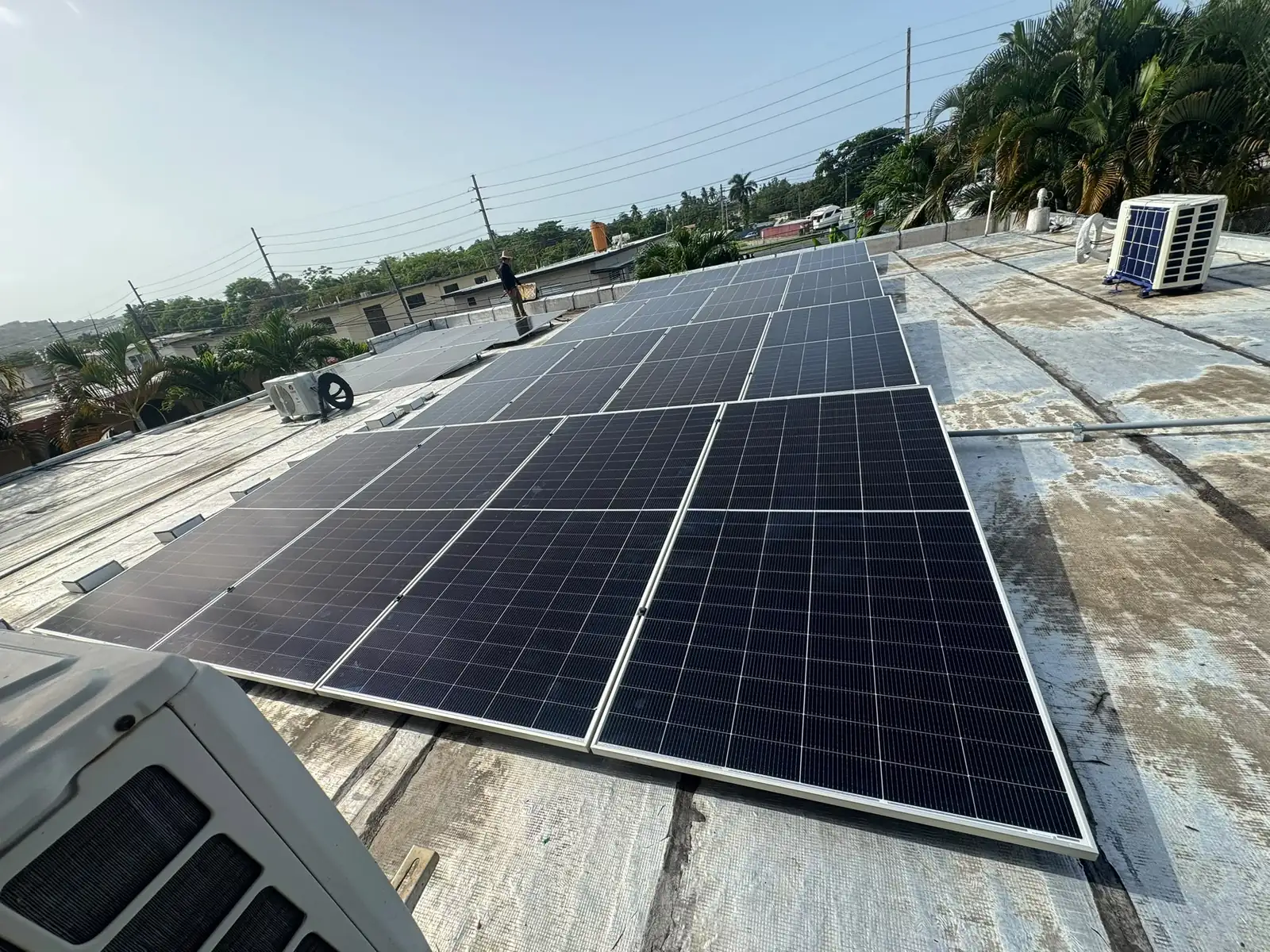
How a Kilowatt Installation Works, Step by Step
LUMA bill review on WhatsApp
Send us your LUMA bill and we review your consumption to size the system and battery. This initial analysis is free in every municipality.
Site visit
We assess your roof, electrical panel, meter base, and where the inverter and batteries will go. The visit is free in Aguada, Aguadilla, Rincón, Moca, Añasco, Mayagüez, Isabela, and San Sebastián; outside that area it carries a fee that is partly credited when you sign.
Quote and engineer-signed design
With your LUMA bill and a review of your roof, we deliver your written quote. Once you sign, the final design is signed by a professional engineer (PE), with engineering advisory from Ing. Julio A. Santiago Pérez (PE #6083).
On-site installation in 2 to 5 business days
Our technicians and electricians install panels, racking, inverter, and batteries, usually in 2 to 5 business days once the equipment arrives.
Producing in 4 to 6 weeks
From contract signing to a producing system takes 4 to 6 weeks, including equipment purchase and shipping. We show you how to use the monitoring app.
Net metering with LUMA
If you want net metering, we handle the net metering process with LUMA for you, from the application to activation.
Permits: on an existing roof, a construction permit is normally not required; if the system does not go on the existing roof (for example, a ground mount or an elevated structure), a permit is required and quoted separately.
Equipment We Install
- Inverters: hybrid inverters for battery systems, and microinverters when the roof or design calls for them.
- Inverters and batteries: mainly EG4. If your case calls for another brand, we explain it in your proposal.
- Solar panels: monocrystalline, with the manufacturer's warranty. The brand varies with availability, so the exact brand and warranty term are in your proposal.
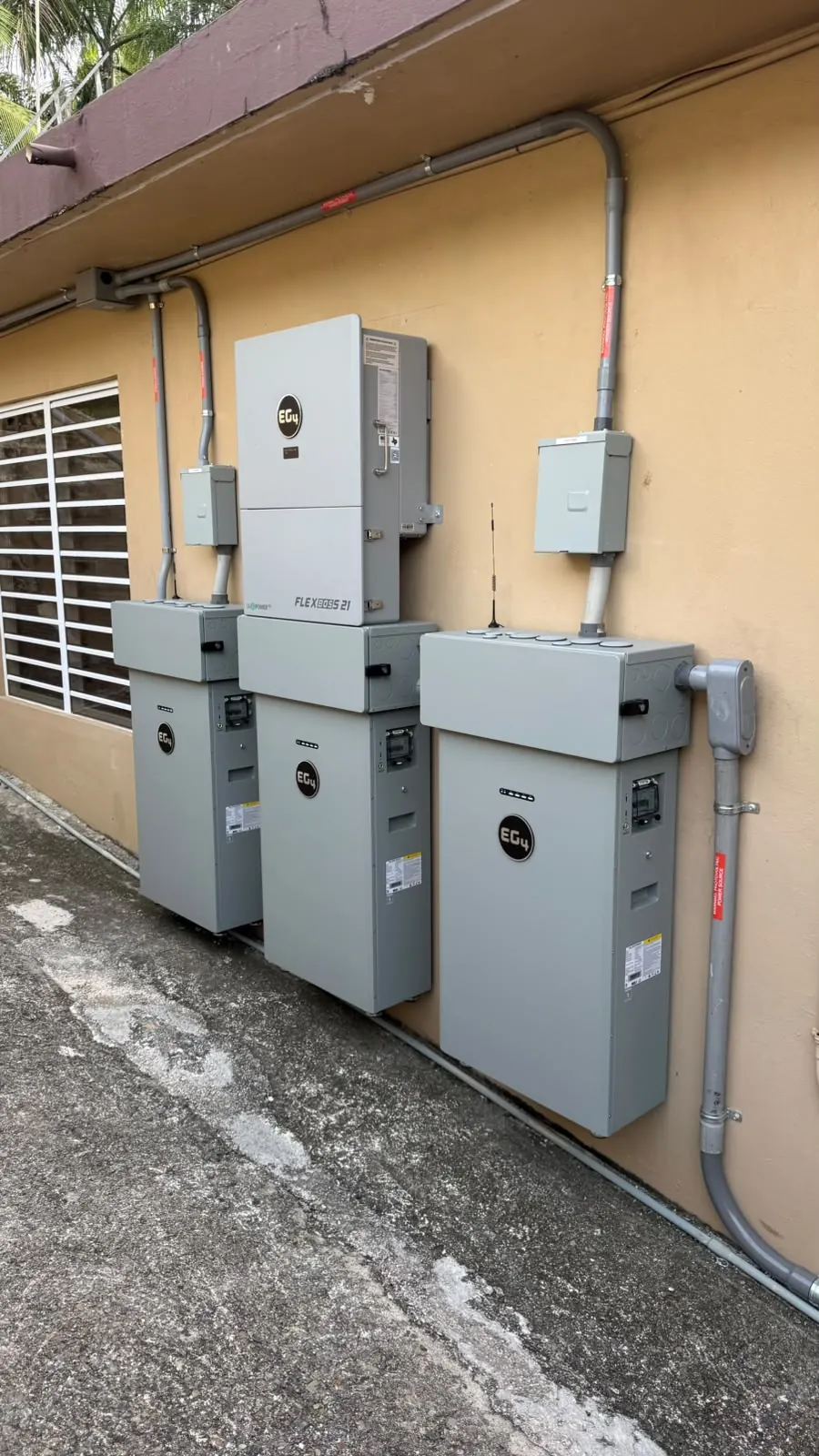
Always With a Battery in Puerto Rico
A grid-tied system without a battery shuts down during a LUMA outage. This is a required safety feature called anti-islanding: the inverter stops producing so it does not send power into lines LUMA crews may be working on. Even at noon in full sun, without a battery you lose power.
With a battery and hybrid inverter, the system disconnects from the grid and keeps powering your home with solar and stored energy. That is why we always recommend battery systems in Puerto Rico. Learn more about battery backup systems.
Warranty
The installation carries a 1-year workmanship warranty, extendable up to 10 years with the Kilowatt Care maintenance plan. Equipment (panels, inverter, and batteries) is covered by the manufacturer's warranty, and Kilowatt PR handles the claim with the manufacturer for you.
How Much Does Solar Installation Cost?
The price depends on your consumption, battery capacity, and roof, so we quote after reviewing your LUMA bill. For a reference before you contact us, see how much a solar system costs in Puerto Rico in 2026.
Kilowatt does not offer financing; we prepare the quote and technical documentation for your bank or credit union. Your lender sets the rate and monthly payment when you pre-qualify.
What's Included in Our Installation?
Ready to stop overpaying LUMA Energy?
Questions About Solar Installation in Puerto Rico
Send us your LUMA bill and photos of your roof
The initial WhatsApp analysis is free in every municipality.
Get a Quote on WhatsAppRelated Guides
- How much does solar cost in Puerto Rico in 2026
- How net metering works in Puerto Rico
- Home battery backup guide for Puerto Rico