Complete Guide: Solar Backup Batteries for the Home in Puerto Rico
LUMA Energy outages are an everyday reality in Puerto Rico. For many families, the question is not whether there will be an outage, but when. Solar systems with battery storage offer the definitive answer: real energy independence for hours or days without grid electricity.
Why Are Batteries Especially Important in Puerto Rico?
In Puerto Rico, LUMA outages are part of daily life, and after a storm they can last for days. During Hurricane María in 2017, many communities were without electricity for weeks or months.
Unlike gas generators, which require fuel, produce noise, and emit gases, solar batteries operate silently, automatically, and with no need for fuel. The system detects the outage in milliseconds and switches to battery power before you notice the difference.
Types of Batteries for Solar Energy
Lithium-Ion Batteries (Recommended)
Lithium-ion batteries are today the industry standard for residential solar storage. They offer high energy density, their lifespan is measured in charge cycles (each manufacturer publishes the figure on its spec sheet), and they require little or no maintenance. They are more expensive than lead-acid alternatives, but their lifespan is significantly longer and they tolerate Puerto Rico's tropical heat better.
Lithium Iron Phosphate (LFP) Batteries
A variant of lithium-ion, LFP batteries offer greater thermal safety and an even longer lifespan, measured in charge cycles. They are slightly larger and heavier, but they are especially suited for installations in warm climates like Puerto Rico, where the ambient temperature can affect battery degradation.
How to Size Your Battery System?
The right battery size depends on two factors: how many hours of backup you need and which loads you want to cover during the outage. Here is an example calculation for a typical home in Puerto Rico:
Example: Essential Loads of a Typical Home
Example calculation, not a promise: if these loads add up to about 5.5 kWh over 12 hours, a battery with about 10 kWh usable covers them with margin for what the inverter itself uses. Your number comes from your own appliance list.
Correct Installation in Puerto Rico's Climate
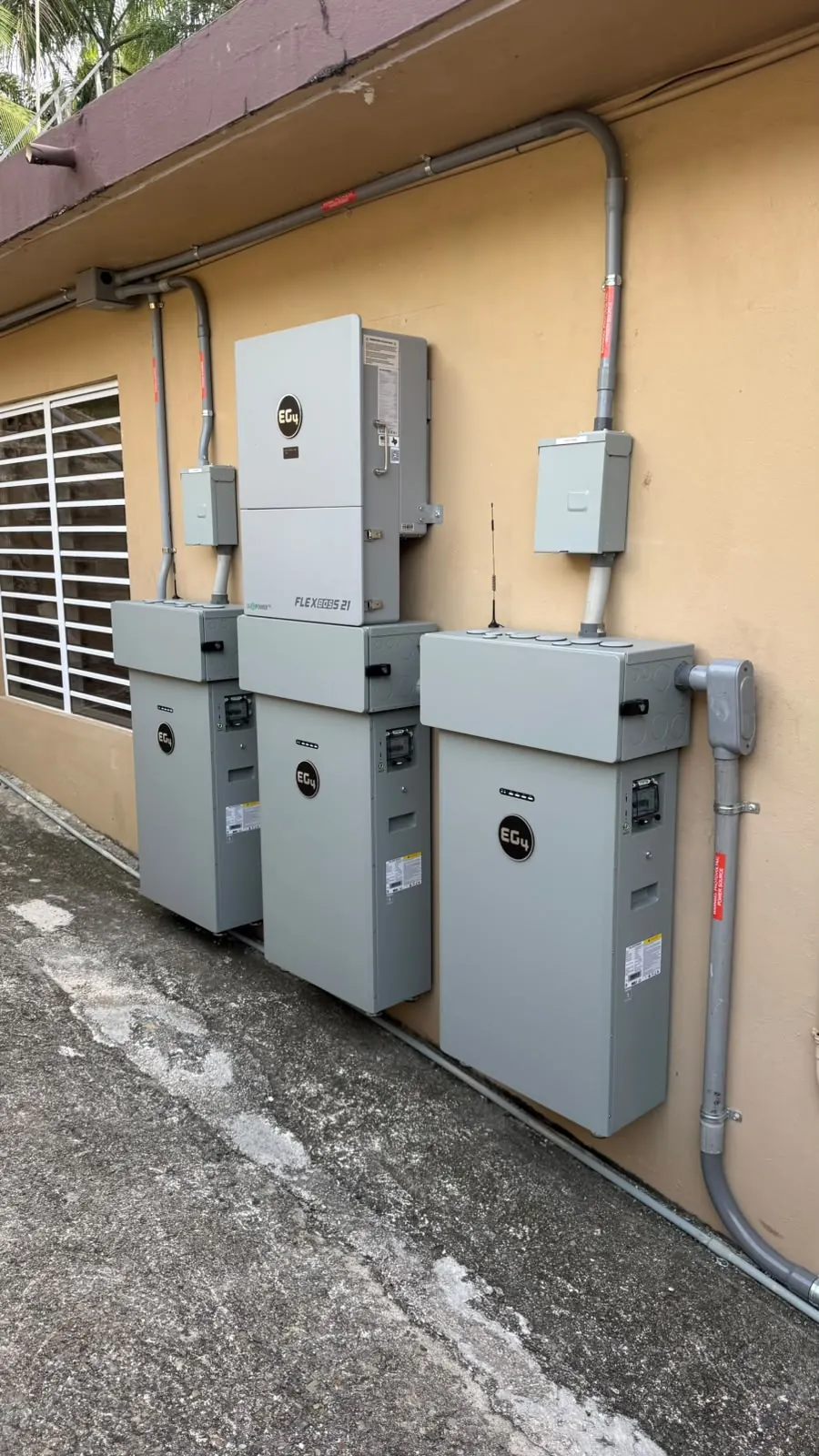
Heat shortens the life of lithium batteries, and each manufacturer publishes the operating temperature range on its spec sheet. That is why Kilowatt PR installs batteries in a shaded, well-ventilated spot, protected from direct sun and away from heat sources. If they have to go outdoors, we use equipment rated for outdoor use.
Solar System + Battery vs. Gas Generator
Many homeowners in Puerto Rico compare solar batteries with gas generators. The NLR (formerly NREL) has documented the drop in storage costs that makes this comparison increasingly favorable. The most honest comparison shows that:
- Batteries work automatically, with no human intervention
- They require no fuel or gasoline storage
- They produce no noise or carbon emissions
- They recharge for free with your own solar panels
- They have a lower maintenance cost in the long run
- The upfront cost is higher; the full comparison is in our battery vs. generator guide
Next Steps: Quote Your System with a Battery
Every home in Puerto Rico has different needs. The number of panels required, the battery size, and the system configuration depend on your consumption, the size of your roof, and the loads you want to back up during outages. Our technicians and electricians with over a decade of experience in Puerto Rico can design the exact system you need. The initial review of your consumption on WhatsApp is free.
Design your system with a battery. The initial WhatsApp review is free.
See how we install solar battery backup systems in Puerto Rico, or message us and we will tell you which battery you need.
Quote a System with a Battery