What to Do After a LUMA Outage: A Practical Guide for Your Solar System
The power went out. Again. In Puerto Rico, LUMA outages are a frequent reality. If you have a solar system, there are specific steps you should follow when the electricity comes back to make sure everything is working correctly. And if you do not have solar yet, this article shows you exactly how your experience would change.
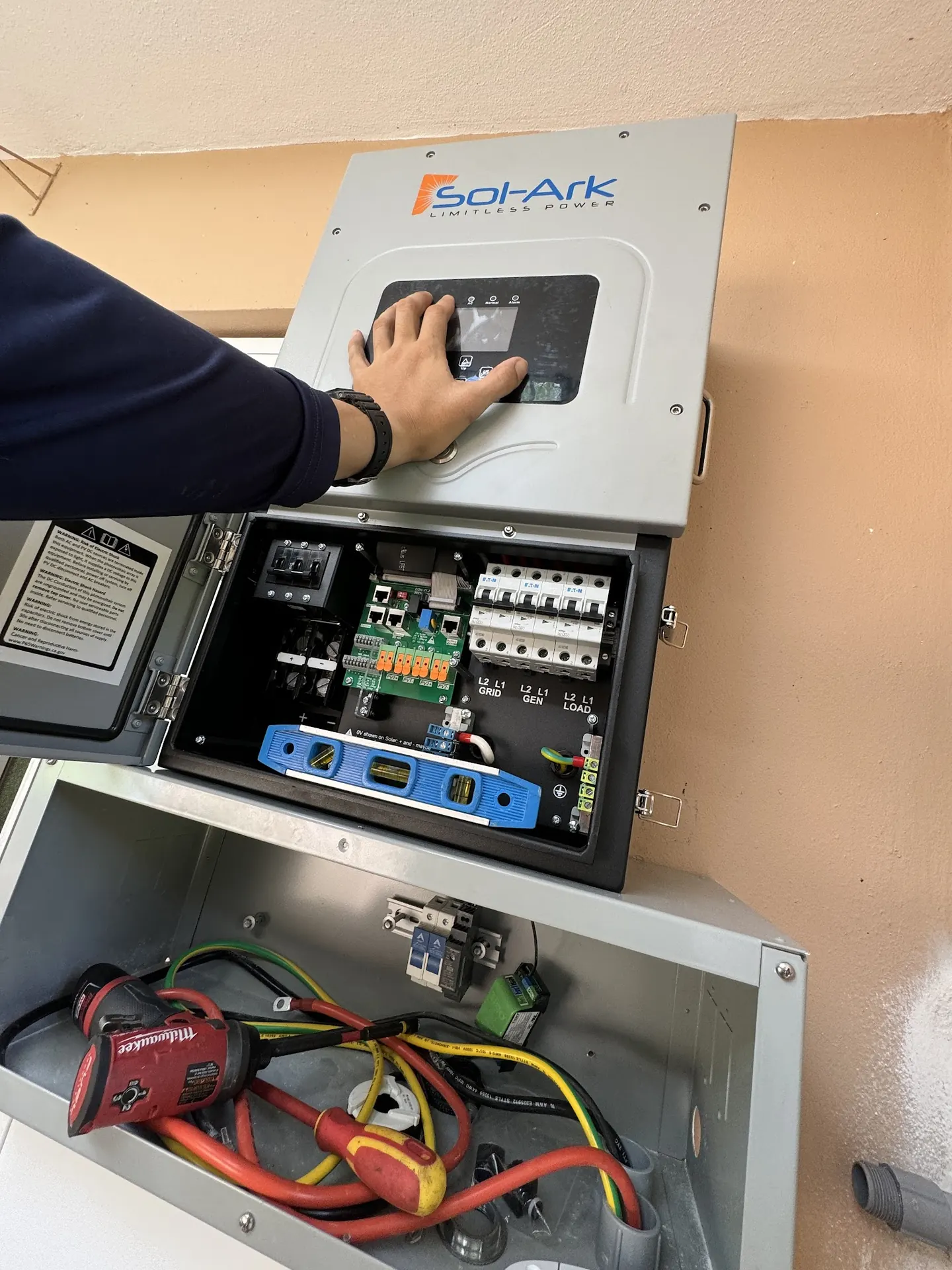
For Solar System Owners: Post-Outage Checklist
When LUMA restores service after an outage, your solar system needs to reconnect to the grid. In most cases this happens automatically, but it is good practice to verify that everything is operating correctly. Follow this checklist:
Step 1: Verify That the LUMA Grid Is Stable
Before checking your solar system, confirm that LUMA's electricity actually came back in a stable way. Sometimes the power returns intermittently before stabilizing. Verify that the lights and equipment in your house work normally for at least 5 minutes before proceeding.
Step 2: Check the Inverter
The inverter is the brain of your solar system. After an outage, check the following:
Inverter Status: What to Look For
Solid or blinking green light
Normal: the system is producing and/or connected to the grid
Action: No action required
Yellow/orange light
Warning: the inverter detected something unusual
Action: Check the monitoring app for more details. It may resolve on its own.
Red light
Error: the inverter detected a fault that requires attention
Action: Note the error code and contact Kilowatt PR
No lights (off)
The inverter is not powered on
Action: Check the inverter breaker in your electrical panel. If it is ON and the inverter does not turn on, contact support.
Step 3: Check the Battery Status (If You Have One)
If your system includes a backup battery, check:
- Charge level: After a prolonged outage, the battery may be at a low level. It should start recharging with the solar panels during sunlight hours.
- Operating mode: Verify that the battery has returned to normal mode (grid-tied) and has not stayed in backup mode.
- Temperature: If the battery feels hot to the touch or shows a temperature warning in the app, ensure good ventilation and monitor it.
Step 4: Check Production in Your Monitoring App
Most modern solar systems include a monitoring app on your phone. After the system reconnects:
- Verify that real-time production shows normal values for the time of day
- Compare with similar previous days (same level of sun)
- If production is significantly lower (more than 20% below normal), it may indicate a problem
Step 5: Check the Breakers
The voltage fluctuations that sometimes accompany outages can trip the protection breakers. Check:
- The inverter's dedicated breaker in your main electrical panel
- The battery breaker (if applicable)
- The solar production circuit breaker
- If any tripped, wait 5 minutes and turn it back on. If it trips again, do not insist: contact Kilowatt PR.
Step 6: Visual Inspection (After Storms)
If the outage was caused by a severe storm, hurricane, or strong weather event, do a visual inspection from the ground:
- Verify that the panels are in their normal position (no displacement)
- Look for debris or branches on the panels
- Check that the visible cables are not loose or damaged
- If you notice anything out of place, take photos and contact Kilowatt PR before attempting any repair
When to Call Kilowatt PR for Support
Most of the time, your system will reconnect without problems. But there are situations that require professional attention. Contact our support team at 787-431-2275 if:
Signs That You Need Technical Support
- The inverter shows a red light or a persistent error code for more than 30 minutes
- The system does not reconnect to the grid after 30 minutes of restored service
- Daily production is 30% or more below normal with no apparent reason
- The battery does not hold a charge or does not recharge with the panels
- You hear buzzing, clicking, or unusual noises from the inverter or battery
- You see visible damage to panels, cables, or mounting structure
- You detect a burning smell near any system component
- The system breakers trip repeatedly
Protect Your System: Preventive Recommendations
There are measures you can take before the next outage to protect your system and ease recovery:
- Install a surge protector: Protects your inverter and electronics against voltage fluctuations when LUMA restores service.
- Keep the monitoring app updated: Notifications alert you to problems before they get worse.
- Know your system: Know where the inverter is, where the dedicated breakers are, and how to read the basic indicator lights.
- Keep the inverter area clear: Good ventilation is key to performance, especially in the heat of Puerto Rico.
- Schedule preventive maintenance: A well-maintained system recovers better after unexpected events.
For Those Who Do NOT Have Solar: How Your Experience Would Change
If you are reading this while waiting for LUMA to restore power, imagine what your life would be like with a solar system with a battery:
- The power goes out and you do not notice: The battery activates in milliseconds. The refrigerator keeps running, the lights stay on, the internet stays connected.
- No rush for fuel: You do not need to run out looking for gasoline for a generator. Your battery recharges on its own with the sun.
- Total silence: No deafening generator noise. Your house is at peace while the neighbors struggle with their generators.
- No health risks: Zero carbon monoxide, zero smoke, zero stored gasoline.
- Real independence: If LUMA takes days to restore power, your system keeps producing and storing energy as long as there is sun.
Kilowatt PR customers with a battery report that during the last prolonged outage, their homes operated normally while neighbors went days without electricity. That peace of mind is priceless, especially when you have elderly people, children, or medical equipment in the home.
Prepared for the Next Outage
LUMA outages are not going away anytime soon. What you can control is how they affect you. If you already have solar, follow the post-outage checklist to make sure your system operates at its best. If you do not have solar yet, every outage is a reminder of what you could avoid.
At Kilowatt PR, with technicians and electricians with over a decade of experience in Puerto Rico, we design systems that not only save you money: they give you real energy independence. And when LUMA fails, that independence is what makes the difference.
Tired of depending on LUMA? Quote your solar system with a battery today.
See how we install solar battery backup systems in Puerto Rico, or message us and we will tell you which battery you need.
Quote a Solar System on WhatsApp