Solar Battery vs Gas Generator: Which Is Better for Puerto Rico?
After every LUMA outage, the same question comes back in thousands of Puerto Rican homes: should I buy a generator or switch to a solar battery? Both options give you power when the grid fails, but the differences in cost, safety, maintenance, and reliability are enormous. Here we compare them head to head with real data for Puerto Rico.
Puerto Rico's Energy Reality
Puerto Rico experiences more outages than any state or territory in the United States. Since Hurricane María in 2017, the electrical grid has been fragile, and the transition to LUMA Energy has not resolved the structural problems. Outages can last hours, days, or weeks depending on the severity of the event.
In this context, having a backup power source is not a luxury: it is a necessity. The question is not whether you need backup, but which option suits you best in the long run.
Head-to-Head Comparison
Solar Battery vs Gas Generator
| Factor | Solar Battery | Gas Generator |
|---|---|---|
| Upfront cost | Quoted by capacity (kWh) | $800–$3,000 |
| 10-year spending | No fuel | $15,000–$20,000 total |
| Fuel | Free (sun) | $150–$300/month in use |
| Maintenance | Minimal | Oil, filters, spark plugs every 100–200 hrs |
| Noise | Silent | 65–80 dB (like a vacuum cleaner) |
| Emissions | Zero | CO, CO₂ (danger in enclosed spaces) |
| Activation | Automatic (milliseconds) | Manual (minutes) |
| Duration without sun | 8–12 hrs (essential loads) | As long as it has gas |
| Duration with sun | Indefinite | N/A |
| Lifespan | 10–15 years | 5–8 years |
| Theft risk | Low (wall-mounted) | High (portable, visible) |
| Resale value | Increases property value | Does not affect value |
10-Year Cost Analysis
The generator's upfront cost is attractive, but it is misleading. In the long run, the generator keeps spending on gasoline and maintenance. Let's look at the numbers:
Gas Generator: $15,000–$20,000 over 10 Years
- Initial purchase: $1,500 (average 7,500W generator)
- Gasoline: $150–$300/month during outages (average $2,400/year in PR)
- Annual maintenance: $200–$400 (oil, filters, spark plugs, service)
- Replacement: You will need to replace it at least once in 10 years ($1,500+)
- Unexpected repairs: $500–$1,000 estimated total
Solar Battery: No Fuel over 10 Years
- Purchase and installation: quoted by capacity (kWh) and included in your quote
- Fuel: $0 (recharges with your solar panels)
- Maintenance: minimal (inspection goes with system maintenance)
- Replacement: Not needed in 10 years (10–15 year lifespan)
The difference is clear: although the generator seems cheaper at first, over 10 yearsthe generator keeps spending on gasoline and maintenance; the battery does not. It recharges with the sun every day, makes no noise, and produces no carbon monoxide.
Safety: The Factor Many Ignore
The Real Dangers of the Gas Generator
After every hurricane in Puerto Rico, hospitals treat cases of carbon monoxide poisoning caused by poorly placed generators. Carbon monoxide (CO) is an odorless, colorless gas that can be deadly in minutes. The rules are clear but frequently ignored:
- Never use a generator inside the house, garage, or carport
- It must be at least 20 feet from windows and doors
- The exhaust must point away from the house
- Stored gasoline is a fire hazard
In addition, the constant noise of a generator (65–80 decibels) affects sleep and daily life, especially during prolonged outages when the entire neighborhood is silent.
The Safety of the Solar Battery
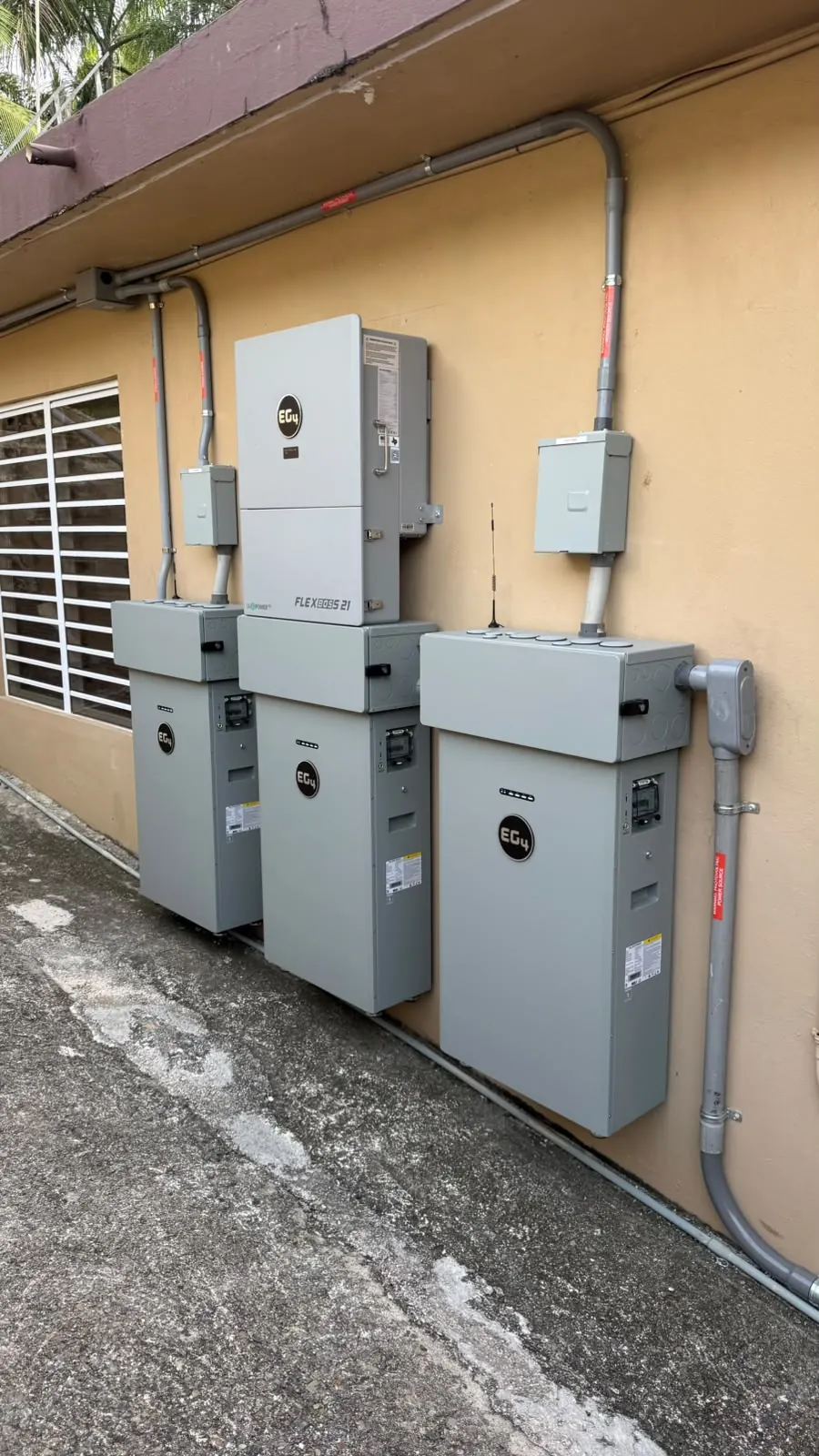
Modern lithium solar batteries are designed with multiple layers of safety: integrated thermal management, protection against overcharge and deep discharge, and a sealed, moisture-resistant casing. They are installed on your home's wall or in a protected space, operate in complete silence, and produce no emissions of any kind.
The Hurricane Factor: When Gasoline Does Not Exist
This is where the solar battery shows its true value in Puerto Rico. After a category 3 or higher hurricane:
- Gas stations close due to lack of electricity for their pumps
- The ones that open form hours-long lines with purchase limits per person
- Tanker trucks cannot get through if the roads are blocked
- Prices spike in the informal market
- Generators get stolen, it is one of the most common post-hurricane thefts
With a solar battery, none of this affects you. As long as the sun comes out (and in Puerto Rico it comes out even between rain bands), your battery recharges automatically. No lines, no dependence, no theft risk because it is mounted on your wall.
When Does a Generator Make Sense?
To be fair, there are scenarios where a generator can make sense:
- Very limited budget: If you can only spend $1,000–$2,000 now and need immediate backup
- Redundant backup: As a second backup behind the solar battery for extreme and prolonged events
- Commercial or industrial use: For loads that require continuous high-capacity power for extended periods
However, for the vast majority of homes in Puerto Rico, the solar battery is the smarter investment in the medium and long term.
Automatic Activation: Instant Peace of Mind
One of the most underestimated benefits of the solar battery is the automatic transition. When LUMA goes out, the battery detects the loss of power and activates backup in milliseconds. You do not have to go out to the yard in the dark, start a motor, connect cables, or wait for the generator to stabilize its voltage.
If you are sleeping when the power goes out, you probably will not even notice. The refrigerator keeps running, the fan keeps spinning, and the internet stays connected. That peace of mind is priceless, especially when you have elderly people, children, or medical equipment in the home.
Conclusion: The Smart Investment for Puerto Rico
For an average home in Puerto Rico, the solar battery is clearly the better option. It burns no fuel and needs no oil changes, is safer, quieter, does not depend on gasoline, increases your property value, and recharges for free with the sun. The gas generator has its place as a low-cost emergency backup, but it does not compete with the solar battery as a permanent solution.
At Kilowatt PR, with licensed electricians and technicians with over a decade of experience in Puerto Rico, we design battery systems sized specifically for your consumption and your backup needs. Each system includes remote monitoring so you always know the status of your battery.
Ready to leave the generator behind? Get a quote on WhatsApp.
Quote a Solar Battery on WhatsApp